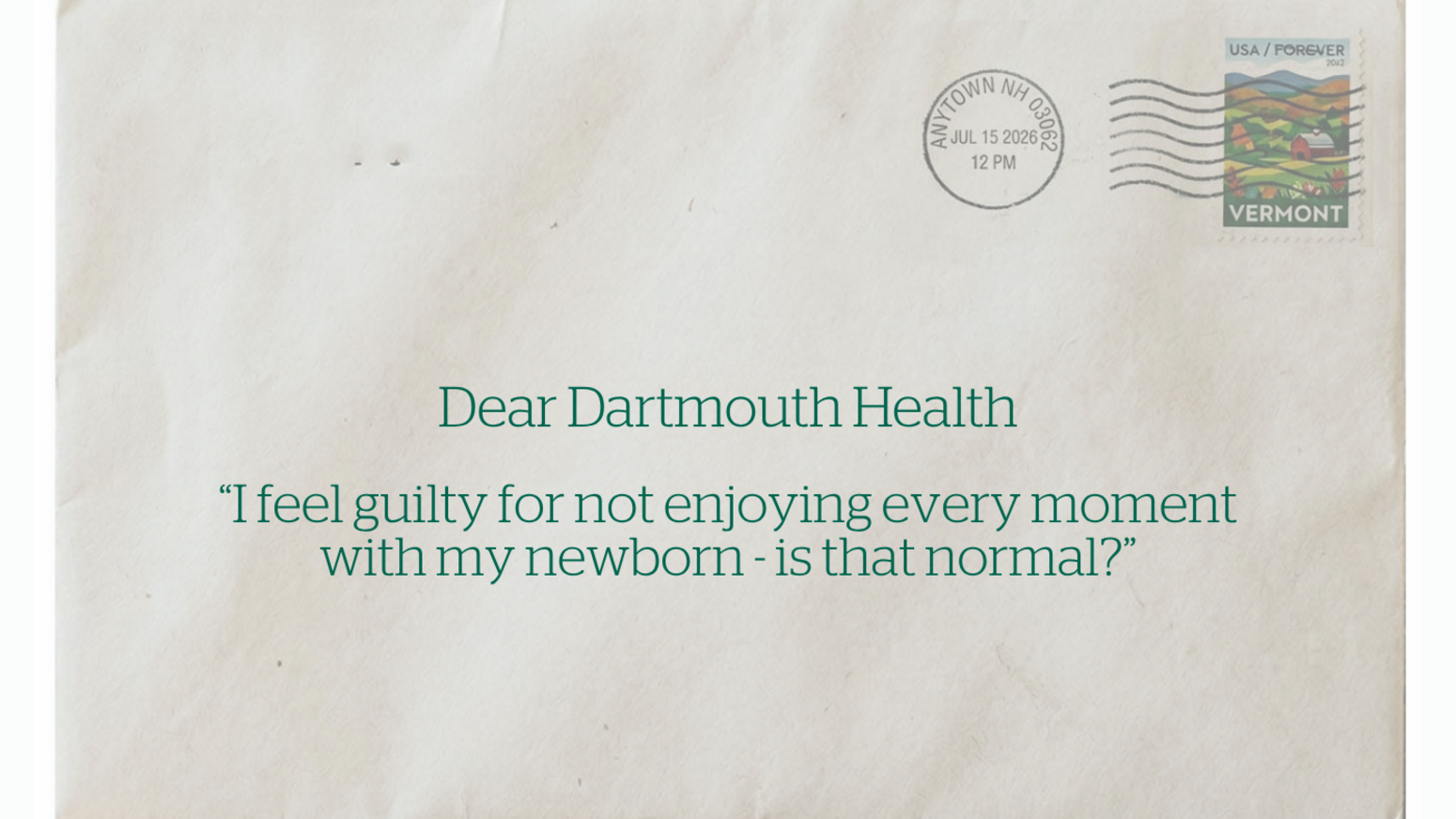
I feel guilty for not enjoying every moment with my newborn. Is that normal?
If you are a new mom who is struggling to bond with your baby, your feeling is common, and there is support.
Questions about bonding—coupled with feelings of guilt, disconnection, and fear—are among the most frequent I hear, says Heather A. Martin, a maternal mental health navigator at Dartmouth Health Children’s.
More than 20% of new mothers experience these feelings around bonding after giving birth.
What many don’t realize is that help is near.
Where can I start if I don’t feel like I’m bonding or I’m struggling to connect?
Every Thursday evening, I host a virtual peer postpartum support group for mothers up to one year postpartum. These feelings that you mention come up frequently in our discussions.
Many moms say they feel pressure to enjoy every moment of motherhood and are often afraid to share their struggles with partners, family members, or friends.
One thing I stress is that there are myriad ways to get support, depending on how you feel, and that many factors can affect bonding with a newborn, including societal pressures, birth trauma, and maternal mental health conditions, such as postpartum depression and anxiety.
One place to start, if you’re feeling isolated and alone, is a peer support group.
What can a peer support group do?
A peer support group can provide a safe, judgment-free space where moms can share openly, learn they are not alone, and exchange coping strategies that have helped others navigate the transition into motherhood.
Some of these strategies include increased skin-to-skin contact, which helps release oxytocin (often called the “bonding hormone”), baby wearing, and simply talking or singing to your baby. You also need to give yourself grace. Like any relationship, bonding takes time.
You can find postpartum support groups and support through the Postpartum Support International NH and Postpartum Support International VT.
What should I do if a support group doesn’t seem like enough?
Get mental health support. Maternal mental health conditions affect one in five new mothers, yet fewer than 20% of those receive treatment.
If you’re struggling, it’s vital you get the treatment you need, for the health of you and your baby. Maternal mental health complications, including suicide, substance misuse and overdose, are the leading cause of maternal death.
There are many treatment options. These include therapy, medication management, support groups, and community-based support.
To find out what’s right for you, start by sharing how you feel with your healthcare provider, who can help you find the necessary help.
If you’re in New Hampshire, you can also visit the New Hampshire Mom Hub program, which offers a wealth of online resources and phone support at 603-403-3400.
Vermonters can go to Help Me Grow Vermont, which can also be reached in Vermont by calling 211, option 6, or texting HMGVT to 898211, or emailing info@helpmegrowvt.org.
What if I need help right away?
Call or text the National Maternal Mental Health Hotline (open 24/7) at 1-833-TLC-MAMA (1-833-852-6262) for free, confidential support before, during, and after pregnancy.
As always, if you or someone you know is thinking about suicide, dial 988 Suicide and Crisis Lifeline (formerly known as the National Suicide Prevention Lifeline) or text HOME to 741741 to connect with a live volunteer crisis counselor. Trained counselors are available 24/7.
If you are concerned about your or a loved one's safety or need emergency medical services, call 9-1-1 or go to the closest emergency room. And never be afraid to reach out and ask for support.
No parent should feel alone in their struggle, and no mother should feel ashamed for asking for help. Every community member can help support mothers and families by normalizing how difficult parenting can be, and by creating stronger, more connected support systems.